Triple Hunt - triple match!
ENJOY GAMESPuzzle
4.543.00 Reviews
- Version
- 26.08.12-google
- Installs
- 10.00K
- Age Rating
- Everyone
Screenshots
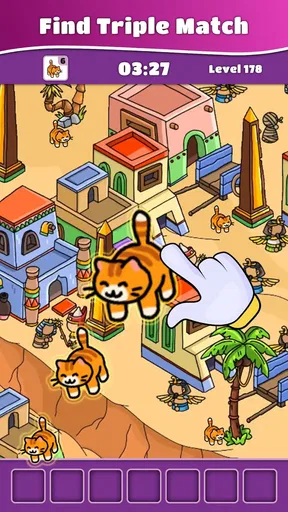
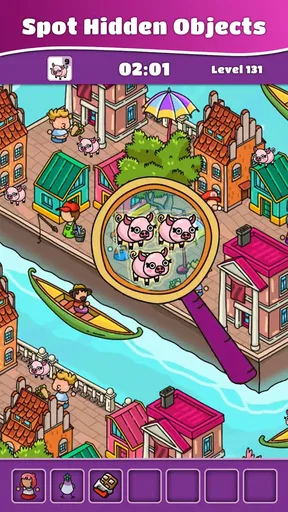
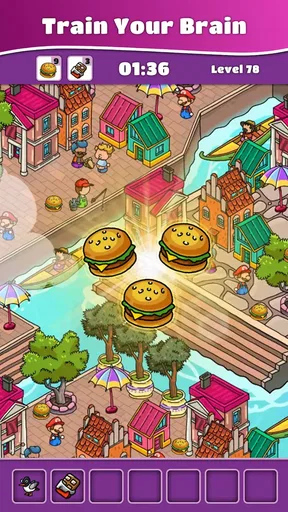
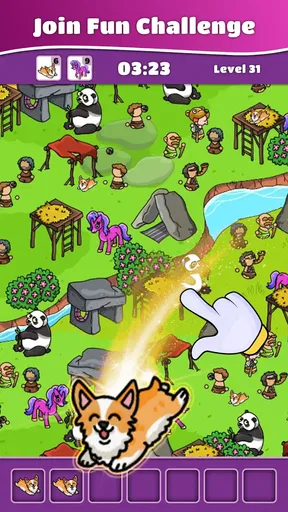
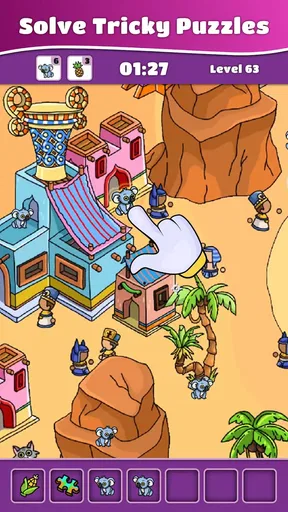
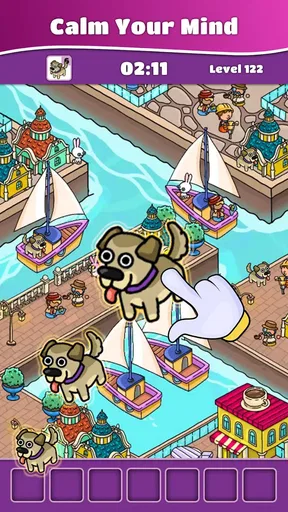
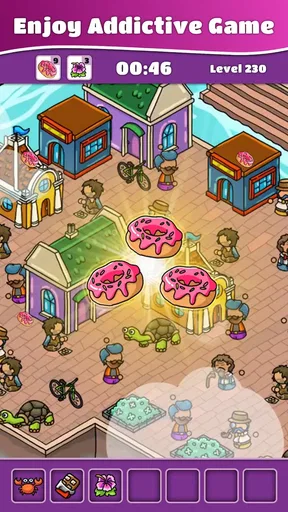
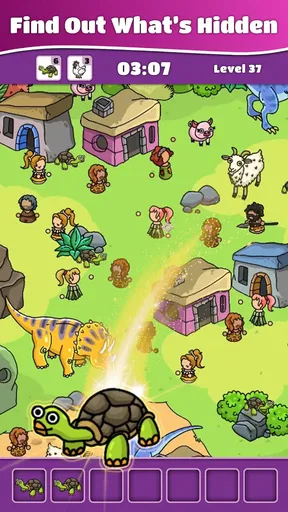
Our Review of Triple Hunt - triple match!
 Analysis by Appyee
Triple Hunt - triple match! is a free puzzle game from ENJOY GAMES that immediately presents a simple idea: explore small scenes, locate objects that belong together, and complete triple matches. I found the first sessions easy to understand but not completely mindless. The pleasure comes from switching between searching and sorting, especially when several objects look similar enough to make a quick choice feel risky.
The game is listed for Everyone, which fits its approachable visual premise and uncomplicated rules. It is available for devices running Android 7.0 or later, and the current version is 26.08.12-google. With a 4.5 average from around 800 ratings and over 10K installs, it has already found a modest audience, although it still feels more like a focused casual title than a huge puzzle platform.
What the first week feels like
My first impression was that Triple Hunt works best when I want a puzzle I can understand without preparation. There is no need to learn a complicated control scheme or memorize a large set of rules. I look through a compact world, identify matching hidden objects, and arrange them into groups of three. That clarity matters on a phone, where a game often has to earn attention within seconds.
The tiny-world presentation gives the search task more personality than a plain tray of identical icons. Instead of treating every round as a purely abstract matching exercise, the game encourages me to inspect the scene. I am not simply waiting for obvious tiles to appear; I am scanning, comparing shapes, and deciding whether an object is genuinely part of a useful set.
That combination makes the opening sessions satisfying. A successful match feels like the result of noticing something rather than merely tapping through a list. The best moments come when I spot the third item after briefly assuming that a pair will remain incomplete. This is a small design choice, but it gives the basic triple-match formula a more exploratory rhythm.
I would recommend starting with a relaxed pace rather than trying to clear every visible possibility immediately. When several objects resemble one another, rushing can make the board harder to read. I found it more effective to identify one likely group, confirm the visual details, and only then move to the next area. This habit also reduces the feeling that I am tapping randomly.
A useful early workflow is to scan the scene in sections. I mentally divide the tiny world into corners, edges, and central objects, then revisit each area after removing a group. Clearing one set can make another object easier to notice. This is more reliable than repeatedly sweeping the whole screen, especially when the scene contains many small visual details.
The first-week appeal is therefore not just the matching rule. It is the short loop of observing, testing, and clearing. I can play while waiting for an appointment, during a brief break, or when I want something gentler than a competitive game. The free entry point also makes it easy to try without committing money at the start, though optional purchases range from $0.99 to $119.99 per item, so I would pay attention before confirming any transaction.
Who gets the most from the opening sessions
This is a good fit for players who enjoy hidden-object searches but want a clearer goal than simply finding everything on a screen. It should also appeal to people who like match-three concepts but prefer looking through a scene instead of swapping pieces on a grid. The combination is light enough for casual play while still giving the eyes and memory something to do.
I can also see it working well as a shared, low-pressure activity. One person can point out a possible object while the other checks whether it completes a trio. That kind of play is more conversational than competitive, and the straightforward rules make it accessible to family members who may not normally play mobile puzzles.
On the other hand, players seeking deep strategy may feel the limits quickly. The central satisfaction comes from recognition and organization, not from building a complex long-term plan. If your favorite puzzle games involve elaborate combinations, strict timers, or carefully calculated chain reactions, this may feel too gentle after the initial curiosity fades.
Why the tiny worlds matter
The setting changes the mental texture of the usual matching alternative. In a conventional match-three game, I usually focus on the grid and search for the best move among visible pieces. Here, the challenge begins before the match: I have to locate the relevant objects and distinguish them from nearby distractions. That extra observation step makes the game feel less automatic.
Compared with a standard hidden-object game, the triple requirement gives each discovery a practical purpose. Finding one object is not enough; I need to connect it with two others. That makes the search more selective and gives the scene a stronger sense of progression. The trade-off is that players who prefer a calm checklist may find the matching requirement slightly more demanding than ordinary object hunts.
Whether it keeps its place after the novelty
I judge a casual puzzle’s staying power less by how long I play at once and more by whether it still suits a particular moment in my day. For this one, the useful test is whether searching for a trio remains a welcome pause or starts to feel like a repeated chore. That distinction helps clarify what kind of value its free entry point can offer.
Month-to-month value depends on your puzzle habit
The important question is not whether Triple Hunt can entertain me during the first few days. It can. The harder question is whether I still want to open it a month later, when the visual novelty of tiny worlds has settled into a familiar routine.
For me, its recurring value comes from convenience rather than dramatic progression. A compact search-and-match session is easy to fit into a daily routine. I can use it as a mental reset between tasks because the objective is specific and the interaction does not require a long uninterrupted commitment. That makes it more sustainable than games that demand a large block of attention every time.
The strongest long-term use case is as a rotation game. I would not make it my only puzzle title, but I would keep it available alongside a word game, a logic game, or a more strategic match-three option. When I want visual concentration without the pressure of a leaderboard or a complicated campaign, this is the kind of app I can return to.
Players who need constant novelty may judge it differently. The core loop remains centered on searching for objects and forming triples, so the game has to earn repeat visits through the quality and variety of its scenes rather than through a radically changing rule set. If that basic activity already feels repetitive to you after several sessions, a different puzzle category will probably offer better lasting value.
One practical way to extend its usefulness is to change how you play rather than simply playing longer. I get more from it when I treat each round as a visual attention exercise: first scan broadly, then narrow down likely matches, and finally verify the third object before tapping. This turns a quick session into a small concentration routine instead of a sequence of impulsive touches.
Maintenance is light, but attention still matters
Triple Hunt does not ask me to maintain a complicated collection, manage a large roster, or remember a dense set of systems. That is a genuine advantage. I can put it down for days and return without needing to reconstruct a strategy or catch up on a long chain of tasks.
The maintenance burden is mostly personal: keeping the game from becoming another automatic scrolling habit. Because the rules are easy to repeat, it is tempting to continue playing simply because another search is available. I find it healthier to use it in short, deliberate sessions and stop when the visual search starts feeling like work rather than a break.
The purchase structure is another part of that maintenance decision. The game itself is free, but the listed in-app purchase range is broad. I would recommend checking the purchase prompt carefully and deciding in advance whether I want to spend anything. For a casual puzzle, setting that boundary early prevents a low-cost experiment from turning into an unplanned expense.
There is also a small device-compatibility advantage: support for Android 7.0 or later means the game is not restricted to only the newest Android phones. That makes it a reasonable candidate for an older spare device or a family phone, provided the screen is comfortable enough for inspecting small objects.
Where fatigue can appear
The same visual search that makes the game distinctive can also cause tiredness. Looking closely for several similar objects is more demanding than scanning a large, high-contrast grid. On a small display, I would expect the experience to be less comfortable than on a phone with a larger screen, particularly during longer sessions.
Fatigue can also come from the repeated rhythm of finding, grouping, and clearing. At first, the loop feels focused. Later, it may feel predictable if I am not in the mood for another observation-heavy round. This is not a flaw in the basic concept so much as a reminder that Triple Hunt is best used as a particular kind of puzzle, not as an all-purpose source of endless variety.
Another possible friction point is the balance between careful searching and quick progress. If I move too slowly, the game can lose its casual momentum. If I move too quickly, I may overlook an object or make a less confident match. My practical solution is to use a two-pass method: make a fast visual scan first, then inspect only the most promising areas. That keeps the search from becoming either frantic or sluggish.
Players who rely on accessibility features should also consider how comfortable they are with small visual targets before settling in. The central activity depends on seeing relationships among objects in a scene, so visual clarity is more important here than it would be in a text-based puzzle. I would test a few sessions in the lighting and screen conditions where I normally play rather than judging it only from a quick download.
How it compares with familiar alternatives
Against a classic match-three game, Triple Hunt feels slower and more observational. There is less emphasis on reacting to a changing grid and more emphasis on finding the right objects in the first place. I prefer Triple Hunt when I want to concentrate quietly; I would choose the traditional alternative when I want faster moves, stronger chain reactions, or a more obviously strategic board.
Against a conventional hidden-object title, the triple-match layer gives me a clearer reason to keep searching. I am not merely checking items off one by one. However, a pure hidden-object game may feel more relaxing for players who dislike the pressure of assembling groups or who enjoy a broader variety of search tasks.
Against a logic puzzle, this game is more visual and less analytical. It exercises attention and recognition rather than demanding written deductions or multi-step calculations. That makes it easier to start casually, but it also means it may not satisfy someone looking for a puzzle that grows substantially more intellectually complex over time.
Who should keep it installed
I would keep Triple Hunt installed if I wanted a free, approachable puzzle for short visual-search sessions. It is especially suitable for people who enjoy matching games but want the extra pleasure of exploring a scene, and for hidden-object fans who would like each discovery to contribute to a trio.
I would skip it if my priority were a deep campaign, competitive ranking, or a puzzle system that constantly introduces new strategic rules. I would also hesitate if small visual details quickly strain my eyes or if I know I dislike repeating a familiar loop. In those cases, a word, number, or grid-based puzzle would likely provide more satisfying long-term variety.
My lasting verdict
Triple Hunt - triple match! earns a place as a pleasant casual puzzle rather than as a replacement for every other game on my phone. Its best quality is the way it combines hidden-object observation with the satisfying closure of completing a group of three. That gives a familiar matching idea enough character to hold my attention during the first week.
Its long-term strength is convenience. I can return after a break without relearning anything, fit a session into an ordinary day, and use the search process as a small mental reset. Its weakness is equally clear: once the tiny-world presentation feels familiar, the repeated search-and-match structure may not be enough for players who need constant escalation.
ENJOY GAMES has made a focused game with a clear audience. The 4.5 average from around 800 ratings suggests a positive reception, while the Everyone rating reinforces its broad accessibility. I would try it freely, play in short sessions, and treat optional purchases with care. If that rhythm matches what you want from a mobile puzzle, it is worth keeping around; if you need deep strategy or endless mechanical change, the novelty is unlikely to carry it for long.
Verdict
Strengths of Triple Hunt - triple match!
- Simple triple-match rules are easy for new players to understand.
- Short levels make it convenient for quick gaming sessions.
- Bright visuals and playful item designs keep the board appealing.
- Increasing difficulty provides a steady challenge as you progress.
- Offline play is useful when you have limited or no internet access.
Limitations of Triple Hunt - triple match!
- Some levels may feel repetitive after extended play sessions.
- Limited moves can make later puzzles frustrating without boosters.
- Progress may depend heavily on watching ads or using power-ups.
- Small objects can be difficult to distinguish on compact screens.
- Frequent rewards and prompts may interrupt the natural game flow.
Similar Picks in This Category
View All
Block Blast!
HungryStudio4.8

Braindom: Brain Games Test
Lahana Game Studio4.6

AMAZE!
CrazyLabs LTD4.6

Sudoku - Classic Sudoku Puzzle
Oakever Games4.7

Art Puzzle - Puzzle Games
Easybrain4.8

Amaze GO!
Oakever Games4.9
Frequently Asked Questions
What is Triple Hunt - triple match!?
Triple Hunt - triple match! is a casual matching puzzle game built around finding and combining three identical objects. During each level, you search through a visually busy board, select matching items, and place them into the collection slots. Completing sets clears the objects and helps you finish the stage before the available space or time becomes a problem. Its simple rules make it easy to start, while crowded layouts and limited moves can make later puzzles considerably more challenging.
How do you play Triple Hunt - triple match!?
To play, tap three identical items on the board to create a matching set. Selected objects are moved into a tray, so it is important to plan your choices instead of tapping randomly. If the tray becomes full before you complete a match, the level may end. The main challenge is recognizing useful combinations, uncovering hidden objects, and choosing an efficient order. Power-ups or helpful tools may also be available when a level becomes difficult.
Is Triple Hunt - triple match! free to download and play?
Triple Hunt - triple match! can generally be downloaded and played without an upfront purchase, although the exact availability and payment options may depend on whether you use Android or iOS. Like many free-to-play puzzle games, it may include optional in-app purchases for boosters, extra attempts, coins, or other conveniences. Advertising may also appear during or between levels. Check the store listing and purchase settings before downloading, especially if children use the device.
Does Triple Hunt - triple match! require an internet connection?
The game may allow some basic puzzle play without a constant connection, but online access can still be required for advertisements, rewards, events, cloud-related features, updates, or in-app purchases. Offline behavior can also vary between versions and devices. If you plan to play while traveling, open the game once with an internet connection and test the levels you need before relying on it completely offline. A connection may provide the most complete experience.
Is Triple Hunt - triple match! suitable for children and casual players?
Triple Hunt - triple match! is accessible for casual players because its core mechanic is straightforward and does not require previous gaming experience. However, difficulty can increase as boards become more cluttered and mistakes become harder to recover from. Parents should review the app’s age rating, advertising, privacy information, and in-app purchase settings before allowing children to play. The game is best suited to users who enjoy short, relaxing sessions with light strategic planning.
Play our best games!


